
How Barcode Marked Cards Work with Poker Analyzers: A Technical Breakdown
The synergy between barcode marked cards and poker analyzer systems represents one of the most sophisticated technical integrations in modern gaming technology. Understanding the precise mechanics of how these two components interact is essential for B2B professionals evaluating gaming equipment, designing security protocols, or developing complementary technologies. This article provides a comprehensive technical breakdown of barcode marked card systems and their operational relationship with poker analyzers.
Understanding Barcode Marking Technology
Barcode marking technology for playing cards involves the application of machine-readable patterns to card surfaces that remain invisible to human observers but can be detected by specialized optical sensors. Unlike visible markings that alter the appearance of cards, barcode markings are designed to be completely undetectable under normal visual inspection.
The Composition of Barcode Markings
Barcode markings applied to playing cards consist of several layered components:
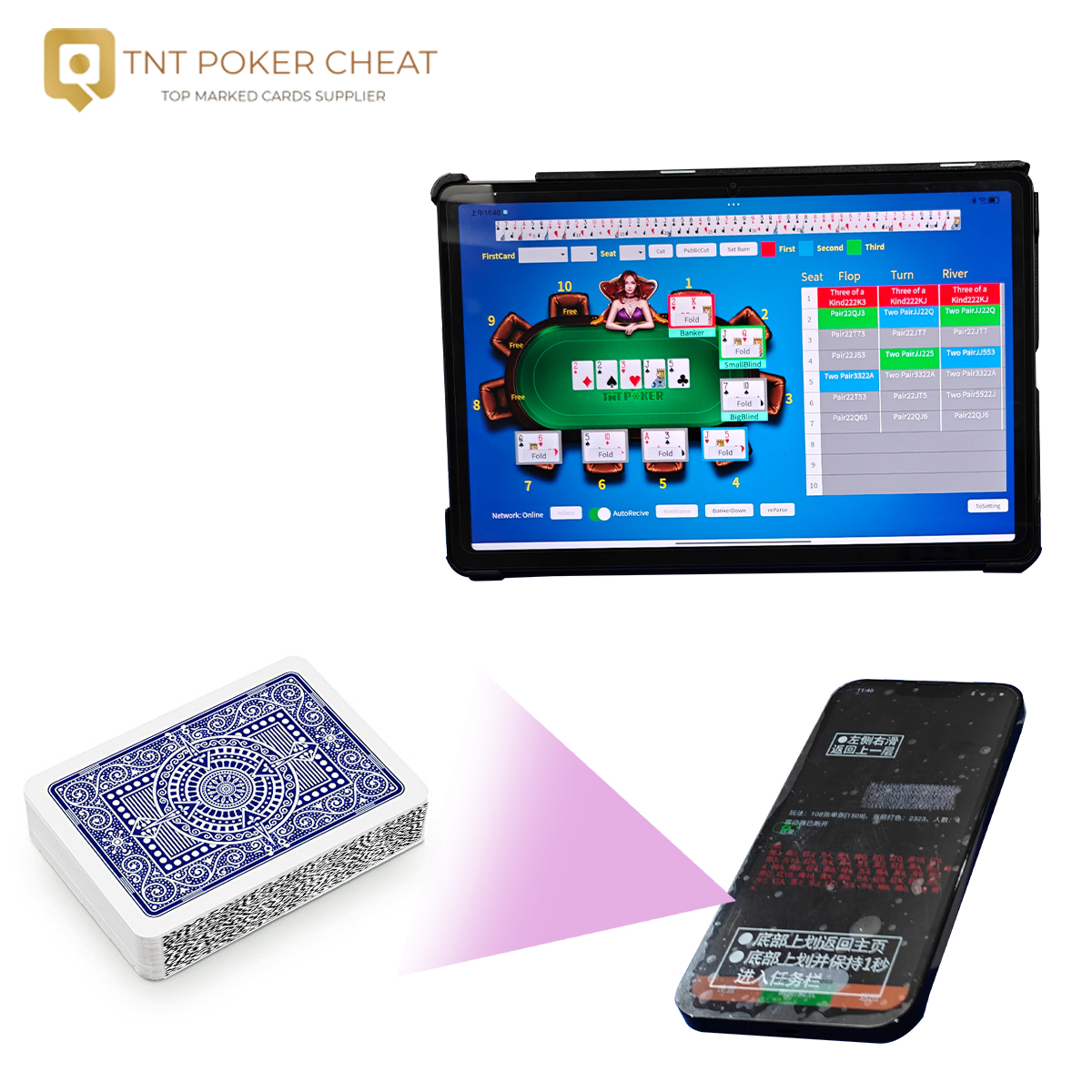
Invisible Ink Formulations: The markings are printed using specialized ink compounds that absorb or reflect light in wavelengths outside the visible spectrum. Most commonly, these inks operate in the near-infrared spectrum (700-1000nm wavelength range), where they can be detected by infrared-sensitive sensors but remain invisible to the human eye, which typically perceives wavelengths between 380-750nm.
Encoding Patterns: The barcode itself uses a proprietary or standardized encoding scheme that maps specific patterns to individual card identities. A typical encoding structure includes:
– A synchronization header that allows the scanner to establish reading parameters
– A data payload containing the card’s unique identifier (suit and rank)
– An error correction segment using Reed-Solomon or similar codes to ensure reliable reading even when partial data is captured
– A termination sequence that signals the end of the barcode
Application Methods: The markings are typically applied during the card manufacturing process using precision printing equipment. This ensures consistent placement and durability. The markings are most commonly positioned along the four edges of each card, allowing omnidirectional scanning regardless of card orientation.
Edge vs. Surface Marking
There are two primary approaches to barcode placement on playing cards:
Edge Marking: Barcodes are printed along the narrow edges of each card (typically the 2-3mm border area). This is the most common approach because it allows cards to be read while stacked or fanned, as only the edge needs to be exposed. Edge marking requires extremely high-resolution printing due to the limited available space.
Surface Marking: Barcodes are distributed across the card face in a pattern that blends with the existing card design. This approach offers more space for encoding data but requires the full card face to be visible to the scanner, limiting operational flexibility.
Most professional-grade systems utilize edge marking for its superior operational versatility.
The Scanning Process: How Poker Analyzers Read Barcodes
The interaction between marked cards and a poker analyzer follows a precise technical pipeline. Understanding each stage is critical for evaluating system performance and troubleshooting operational issues.
Stage 1: Optical Capture
The scanning process begins with optical capture, where the analyzer’s sensor array acquires an image of the marked card edge.
Sensor Technology: Modern analyzers use CMOS (Complementary Metal-Oxide-Semiconductor) sensor arrays optimized for infrared detection. These sensors differ from standard camera sensors in several important ways:
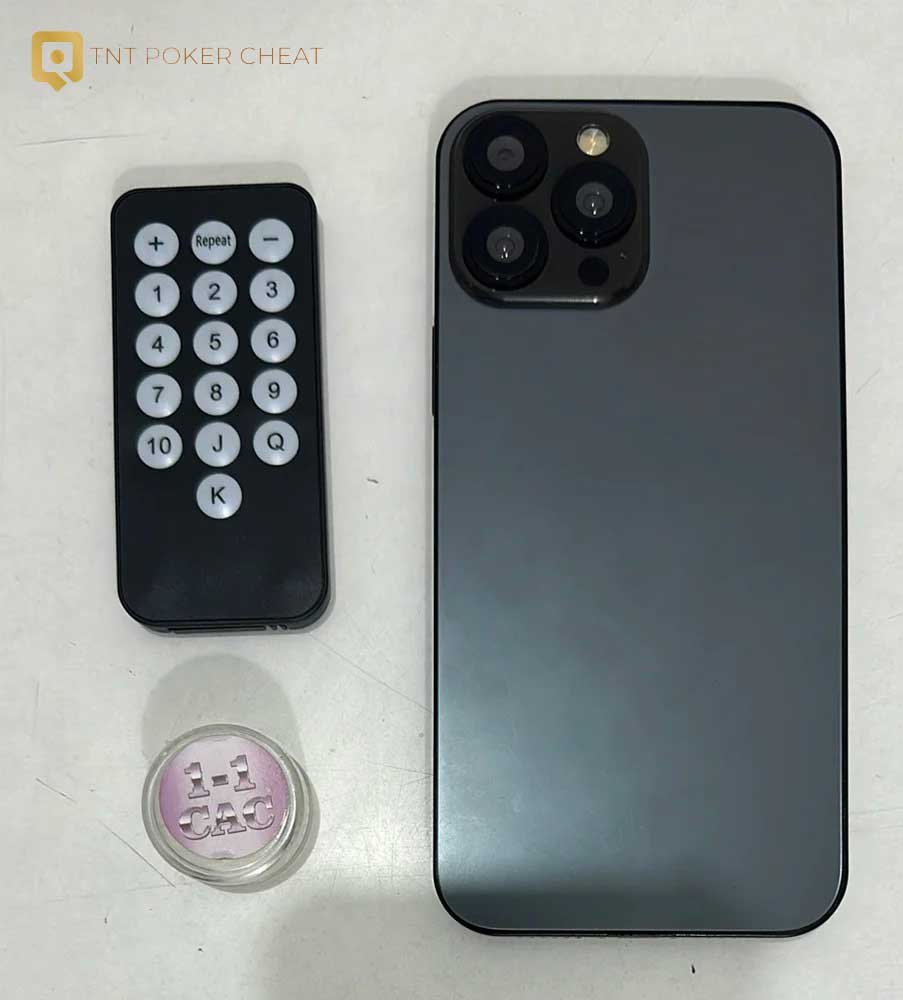
– Spectral sensitivity shifted toward near-infrared wavelengths
– Higher frame rates (typically 60-120 fps) to capture sharp images of moving cards
– Global shutter technology to eliminate motion artifacts that could distort barcode patterns
– Integrated infrared illumination (typically 850nm or 940nm LEDs) that provides consistent lighting regardless of ambient conditions
The sensor is paired with a specialized optical filter that blocks visible light while passing infrared wavelengths. This ensures that the barcode markings — which only respond to infrared illumination — are captured with maximum contrast against the card background.
Stage 2: Image Preprocessing
Raw sensor data undergoes real-time preprocessing before barcode decoding begins. This stage is critical because environmental variables can significantly affect image quality.
Key preprocessing operations include:
– Noise reduction — applying adaptive filtering algorithms to remove sensor noise and ambient interference
– Contrast enhancement — stretching the histogram of captured images to maximize the distinction between marked and unmarked areas
– Geometric correction — compensating for card tilt, rotation, and perspective distortion to produce a normalized barcode image
– Binarization — converting the processed image to a binary format (black and white) where the barcode pattern is clearly delineated
Preprocessing typically adds 5-15 milliseconds to the total processing pipeline but dramatically improves decode reliability, particularly in challenging environmental conditions.
Stage 3: Barcode Decoding
Once the image is preprocessed, the decoding algorithm extracts the card identity from the barcode pattern.
The decoder performs the following operations in sequence:
1. Pattern localization — scanning the binary image to identify the synchronization header, which establishes the starting point and orientation of the barcode
2. Module extraction — sampling the barcode at regular intervals to read each encoded bit, accounting for variable card distances and scanning angles
3. Error correction — applying the Reed-Solomon algorithm to reconstruct any data corrupted or missed during capture, with typical systems capable of correcting up to 15-20% data loss
4. Payload interpretation — translating the corrected bit sequence into the corresponding card identity using a lookup table stored in the analyzer’s firmware
The entire decode process typically completes in under 50 milliseconds on modern hardware, enabling true real-time operation.
Stage 4: Result Transmission
Once the card identity is decoded, the result is transmitted to the output subsystem. Depending on the system configuration, this may involve:
– Audio output — converting the result to a compressed audio signal transmitted to a wireless earpiece
– Visual output — displaying the result on a connected screen or heads-up display
– Data logging — storing the result in the analyzer’s internal memory for post-session analysis
– Wireless relay — transmitting to a companion device for further processing or remote monitoring
Transmission latency is typically under 100 milliseconds, meaning the total time from card exposure to result delivery is generally under 300 milliseconds in well-optimized systems.
Technical Factors Affecting Performance
Several technical variables can significantly impact the performance of barcode marked card systems. B2B purchasers and system integrators should understand these factors to ensure optimal deployment.
Card Quality and Durability
Barcode marking quality degrades over time due to handling, shuffling, and environmental exposure. Key durability factors include ink adhesion quality (resistance to abrasion), coating integrity (protective overcoats), environmental resistance (humidity, temperature, UV exposure), and deck lifespan (professional-grade marked decks typically maintain readable barcodes for 200-400 hours of active use).
Scanning Distance and Angle
The effective scanning range is determined by the optical system’s field of view and depth of field. Leading systems read barcode markings at 15-80cm distances, with optimal performance at 30-50cm. Premium systems maintain reliable reading at angles up to 45 degrees from perpendicular, while multi-directional edge marking allows omnidirectional scanning.
Environmental Interference
Lighting conditions represent the most significant environmental variable. Intense ambient infrared from sunlight, halogen lighting, or heat sources can create interference, though systems with adaptive exposure control compensate automatically. Electromagnetic interference from nearby electronics can affect wireless transmission; quality systems employ frequency-hopping spread spectrum (FHSS) techniques to maintain reliable communication.
Integration with Poker Analyzer Software
The barcode reading hardware is only one component of the overall system. The analyzer’s software platform transforms raw card identification data into actionable analytical output.
Real-Time Probability Calculation
As each card is identified, the software updates its internal game model: maintaining card inventories, calculating per-player win probabilities, computing pot odds and expected value metrics, and tracking community cards through each betting round. The probability engine typically employs Monte Carlo simulation, running thousands of randomized completions to generate statistically robust estimates. Modern embedded processors execute 10,000-50,000 simulations per second.
Game Variant Support
Professional analyzer systems support multiple poker variants, with each variant requiring specific configuration parameters:
– Texas Hold’em — community card tracking, multi-player hand evaluation, board texture analysis
– Omaha — four-card hand evaluation with mandatory two-card usage rules
– Seven-Card Stud — visible card tracking and remaining card probability calculation
– Short-deck (Six Plus) Hold’em — modified deck composition and adjusted probability tables
The software automatically applies the correct evaluation logic based on the selected game variant, ensuring accurate analysis across diverse gaming scenarios.
Manufacturing Quality Standards
For B2B purchasers, understanding the manufacturing quality standards applied to barcode marked cards is essential for evaluating product reliability.
Printing Precision: Top-tier manufacturers achieve marking precision within ±0.05mm using industrial-grade equipment, ensuring consistent readability across decks and batches.
Quality Control Protocols: Leading manufacturers implement multi-stage QC: automated optical inspection of every card, statistical sampling for infrared readability, durability cycling tests, and batch-level consistency verification.
Material Standards: Premium marked cards use PVC or PVC-cellulose blends with surface treatments optimized for infrared ink adhesion and durability Pokercheat8 Cheating Device.
System Configuration and Calibration
Proper configuration and calibration are critical for maximizing system performance. Key calibration parameters include:
– Sensor exposure settings — adjusted based on ambient infrared levels and card marking contrast
– Decode sensitivity thresholds — balanced to minimize false readings while maintaining capture reliability
– Output format configuration — customized audio encoding, display preferences, and data logging options
– Game variant selection — ensuring the software applies the correct analytical model
Most modern systems offer automated calibration routines that evaluate environmental conditions and adjust parameters accordingly. However, manual fine-tuning by experienced operators can further optimize performance for specific deployment scenarios.
Conclusion
The technical interplay between barcode marked cards and poker analyzers represents a sophisticated integration of optics, materials science, embedded computing, and software engineering. For B2B professionals, a thorough understanding of these technical foundations enables more informed procurement decisions, more effective system deployment, and more accurate evaluation of vendor capabilities.
As the technology continues to mature, improvements in sensor sensitivity, decoding algorithms, and materials durability will further enhance system performance. Organizations investing in this technology should prioritize systems with robust technical specifications, comprehensive game variant support, and clear documentation of manufacturing quality standards.
FAQ
Are barcode marked cards detectable by visual inspection?
No. Professional-grade barcode markings are applied using infrared-reactive inks that are completely invisible under normal lighting conditions. They cannot be detected by visual inspection, even under magnification. Only specialized infrared-sensitive equipment can reveal the presence of these markings.
How long do barcode marked cards remain readable?
Under typical usage conditions, professional-grade marked cards maintain readable barcodes for approximately 200-400 hours of active play. Factors affecting lifespan include handling intensity, environmental conditions, and card material quality. Signs of degradation include intermittent scanning failures and increased error correction activation.
Can barcode marked cards be used with any poker analyzer?
Not necessarily. Different manufacturers may use different barcode encoding schemes. While some analyzers support multiple encoding formats, compatibility should always be verified before procurement. Using cards with incompatible encoding will result in scanning failures or incorrect card identification.
What happens if a barcode is partially damaged?
The error correction algorithms built into modern barcode systems can typically compensate for 15-20% data loss. If a barcode is partially damaged, the system will attempt to reconstruct the missing data using Reed-Solomon error correction. However, if damage exceeds the correction threshold, the card will not be readable and may need to be replaced.
How are barcode marked cards manufactured?
The manufacturing process involves printing invisible infrared-reactive barcode patterns onto card edges using precision industrial printing equipment. This is typically done during the card manufacturing process itself, ensuring optimal ink adhesion and marking precision. The process requires specialized equipment and controlled environmental conditions to ensure consistent quality.
Can the barcode encoding be customized?
Some manufacturers offer custom encoding schemes for clients with specific security or compatibility requirements. Custom encoding can prevent unauthorized card use with non-approved analyzers. However, custom systems require corresponding firmware modifications in the analyzer, which may limit flexibility. Standard encoding formats are recommended for most applications.