
Buying RFID Casino Tables: A Procurement Guide for Casino Operators
The decision to equip a casino floor with RFID-enabled gaming tables represents a significant capital investment that reshapes how the property operates. Procurement managers who approach this project with a clear framework — grounded in operational requirements, total cost of ownership analysis, and vendor risk assessment — are far more likely to achieve a deployment that delivers measurable returns. This guide walks through the end-to-end procurement process, from initial assessment through contract execution and delivery management.
Framing the Business Case
Before drafting a request for proposal or engaging any supplier, the procurement team must establish why RFID tables are being considered and what success looks like. Different operators pursue RFID for different reasons, and these motivations shape every downstream decision.
The most common value drivers include:
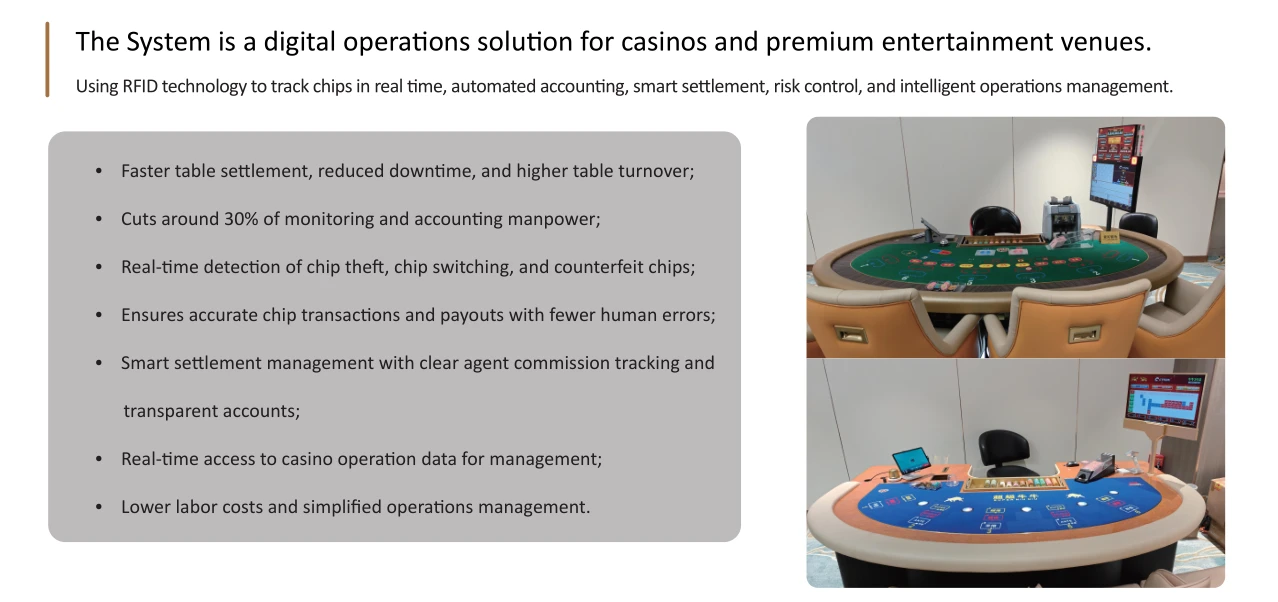
– **Revenue protection**: RFID tables reduce chip theft, counterfeiting, and settlement errors that erode table game margins. A property with significant internal theft or reconciliation discrepancies may see a rapid payback period.
– **Operational efficiency**: Real-time bet data eliminates the need for manual Pit audits and reduces the frequency of count room discrepancies. Staff hours saved can be redirected to revenue-generating activities.
– **Table game analytics**: RFID data enables heat maps of table utilization, optimal bet sizing analysis, and game performance benchmarking that inform floor layout decisions and game mix optimization.
– **Regulatory positioning**: In jurisdictions with tightening oversight, RFID tables demonstrate a commitment to integrity that can strengthen the operator’s regulatory relationships.
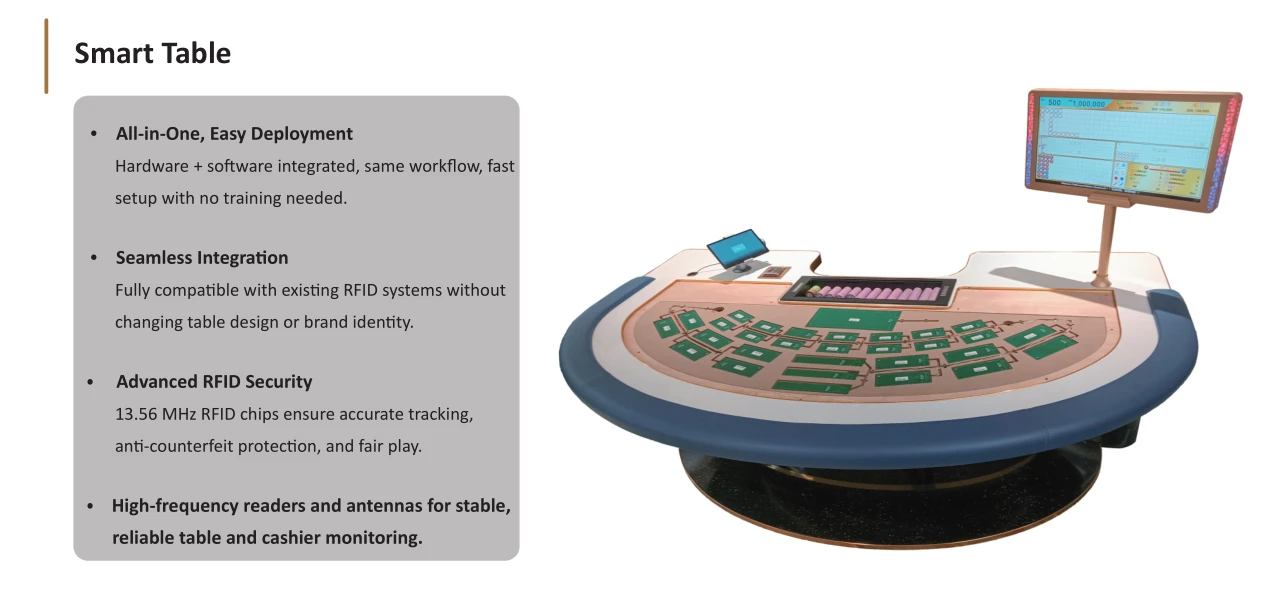
Quantify the primary business driver with actual property data. For example, if revenue protection is the goal, estimate annual losses from chip-related discrepancies over the past three years. If operational efficiency is the driver, calculate staff hours currently spent on manual table reconciliations and estimate the labor cost savings. These figures anchor the business case and define the maximum acceptable investment RFID Baccarat Table.
Building the Technical Specification
A well-structured technical specification prevents scope disputes and ensures that all suppliers are bidding on the same baseline. The specification should address five key areas:
Chip and Table Hardware
Define the physical characteristics of the chips you intend to use with the RFID system. Chip specifications — including chip diameter, weight, material composition, and embedded RFID tag type — directly affect antenna design and read performance. If you plan to use chips from a specific manufacturer, include their specifications in the RFP. If you want the supplier to recommend chip specifications, state that explicitly.
For table hardware, specify the game types to be supported (baccarat, blackjack, roulette, poker variants), the table dimensions, and any physical constraints such as existing table infrastructure that must be accommodated.
Read Performance Requirements
Establish minimum acceptable performance thresholds. Recommended benchmarks for a production-ready system include:
– Sustained read accuracy of 99.5 percent or higher during active gameplay
– Maximum read latency of 200 milliseconds from chip placement to data display
– Coverage of 100 percent of the active betting area with no dead zones exceeding 5 centimeters in diameter
– Performance consistency across all tables in the order, not just a sample unit
Specify the test methodology you will use to verify performance, including the number of players, chip density, and gameplay scenarios to be simulated during acceptance testing.
Software and Integration Requirements
Define the software platform you expect the RFID system to integrate with. List your casino management system (CMS) vendor and version, player tracking system, surveillance management platform, and any other systems that will consume RFID data. The supplier must demonstrate documented integration capability with these platforms — ideally with reference installations at existing customer properties.
Require the supplier to specify their API architecture, data format standards, and the latency characteristics of their data export process. A system that batches data updates every thirty seconds will not meet the real-time requirements of a modern casino floor.
Physical and Environmental Specifications
Casino floors are demanding physical environments. Specify requirements for:
– Operating temperature range (accounting for ambient floor conditions and localized heat from lighting)
– Resistance to liquid spills, cleaning chemicals, and food service debris
– Physical durability of embedded components under normal table use
– Antenna embedding method and long-term stability of embedded electronics
Support and Maintenance Requirements
Define your expectations for ongoing support, including maximum acceptable response times for different severity levels, spare parts availability, firmware update policy, and training requirements for your maintenance team.
The Request for Proposal Process
Issue your RFP to a curated list of qualified suppliers — typically five to eight vendors who have demonstrated capability in the casino RFID space. The RFP should include your technical specification, commercial terms, project timeline, and the evaluation criteria and weighting that will govern supplier selection.
Key commercial terms to address in the RFP include:
– **Pricing structure**: Request unit pricing for tables, chips, software licensing, and integration services. Ask for volume discount schedules if you anticipate future expansion orders.
– **Payment milestones**: Define payment stages tied to project milestones such as design approval, factory acceptance testing, delivery, and final installation acceptance.
– **Warranty terms**: Specify the minimum warranty period, what components are covered, and whether the warranty includes software bug fixes or only hardware replacement.
– **Support contracts**: Request pricing for optional support contracts beyond the base warranty period. Annual support contract costs should be a separate line item for total cost of ownership comparison.
– **Intellectual property**: Clarify ownership of any custom software developed for your deployment, integration code, and data generated by the system.
Evaluating Supplier Responses
Structure your evaluation around weighted criteria that reflect your priorities. A typical weighting for a revenue protection-driven project might look like:
– Technical performance (30 percent)
– Integration capability (20 percent)
– Pricing and total cost of ownership (20 percent)
– Regulatory experience and certifications (15 percent)
– Support infrastructure and financial stability (10 percent)
– Innovation and roadmap (5 percent)
Score responses independently using predefined scoring rubrics before convening the evaluation team. This prevents individual biases from skewing the selection process.
Pilot Programs: Your Most Valuable Due Diligence Tool
A paid pilot — deploying one to three tables on your actual floor for a period of thirty to ninety days — provides data that no specification document or sales demo can match. During the pilot, measure:
– Real-time read accuracy under your specific floor conditions, player volumes, and game types
– Integration reliability with your live CMS and surveillance systems
– Staff acceptance and ease of use for Pit managers and floor supervisors
– Support responsiveness when issues arise during live operations
– Data quality and usefulness for the analytics use cases you identified in the business case
Define pilot success criteria in advance and commit to a decision framework. Agree with the supplier on what happens at the end of the pilot — whether the pilot tables convert to a full order, whether they are returned, and how any pre-pilot customization costs are handled.
Contract Negotiation Principles
Once you have selected a supplier through the pilot or evaluation process, the contract negotiation phase determines the risk allocation for the remainder of the project. Three areas deserve particular attention:
Acceptance Testing Protocols
Define precise acceptance test procedures that both parties agree to before the contract is signed. Acceptance testing should include factory acceptance testing (FAT) at the supplier’s facility before shipment, and site acceptance testing (SAT) after installation on your floor. Define pass/fail criteria for each test phase, and specify what happens when a table fails acceptance testing — repair timelines, replacement protocols, and whether repeated failures trigger contract termination rights.
Liability and Performance Guarantees
Negotiate service level agreements that specify minimum uptime guarantees, maximum downtime incidents per month, and financial remedies for missed commitments. A supplier that refuses to back their performance claims with contractual remedies is signaling that their confidence in their product is limited.
Pricing Lock and Cost Transparency
Request pricing locks for the base order and establish clear pricing mechanisms for future expansion orders. Understand the supplier’s cost structure — chip costs, software licensing fees, support contract pricing — so that future orders are not subject to opaque pricing. A five-year pricing agreement with defined escalation caps protects against unexpected cost increases.
Managing Delivery and Installation
Even the best procurement process can unravel during delivery and installation. Assign a dedicated project manager who owns the relationship with the supplier and coordinates the internal activities required to receive, install, and commission the tables.
Key delivery milestones to manage include:
– Factory acceptance testing scheduling and attendance
– Shipping and customs clearance timelines (for internationally manufactured equipment)
– Receiving inspection upon arrival at your property
– Scheduling of supplier technical staff for on-site installation and commissioning
– Integration testing with all connected systems
– Regulatory inspection and approval coordination
– Staff training completion before live operations begin
Build contingency time into the project schedule for each phase. Installation problems discovered on-site — integration issues, physical fit challenges, unexpected regulatory requirements — consume time that was not accounted for in optimistic project plans.
Frequently Asked Questions
Should we include RFID chips in the initial purchase order or source them separately?
The chip supply strategy depends on whether the RFID table supplier also manufactures chips or sources them from a third-party chip vendor. Some suppliers bundle chip procurement and pre-encoding, which simplifies logistics and ensures chip-tag compatibility with their antenna system. Others sell tables only and require you to source chips independently. Evaluate both models based on your internal procurement capabilities and whether you have existing chip supply relationships that offer better pricing Macaumr Gaming Technology.
How do we handle procurement approval when the total investment crosses a capital expenditure threshold?
Capital expenditure approval processes vary by organization. The most effective approach is to structure the business case with a clear payback period and return on investment calculation, backed by pilot data. For projects above the approval threshold, consider breaking the procurement into phases — an initial pilot order that validates the business case, followed by a full rollout order contingent on pilot results. This phased approach reduces approval risk and gives the procurement team negotiating leverage with suppliers.
What procurement risks are specific to internationally sourced RFID table suppliers?
International procurement introduces currency fluctuation risk, extended lead times, customs and import duty exposure, and logistical complexity. Supply chain disruptions — port congestion, shipping container shortages, geopolitical events — can delay delivery by weeks or months. Mitigate these risks by requiring suppliers to maintain safety stock of critical components, negotiating flexible delivery windows rather than fixed shipping dates, and securing marine cargo insurance for all shipments. Including penalty clauses for delivery delays in the purchase contract aligns supplier incentives with your project timeline.
How do we benchmark the pricing we receive from a supplier?
RFID table pricing is not standardized — each supplier has a different cost structure and margin model. The most reliable benchmarking approach is to request pricing from a minimum of three qualified suppliers responding to the same specification. When evaluating pricing, compare total cost of ownership over a five-year horizon rather than unit price alone. Factor in chip costs, software licensing fees, support contract costs, integration service costs, and projected maintenance costs. A supplier with a higher unit price but lower software licensing and support costs may offer a better total cost of ownership.
When is it better to lease versus buy RFID tables?
Leasing makes economic sense when capital budgets are constrained, when technology obsolescence risk is high, or when you want to preserve flexibility to switch suppliers at the end of the lease term. Buying makes sense when you have strong capital position, when the total cost of ownership analysis favors ownership, and when you want to avoid the restrictions that often accompany leased equipment — such as limitations on customization or supplier-required maintenance schedules. For most established casino operators with solid capital positions, purchasing delivers better long-term economics, provided the supplier selection process produces a high-quality product with a demonstrated lifespan of seven to ten years.